
Architecture Roles
Enterprise and system architecture roles in NUP
NUP defines specialized architecture roles that extend beyond the core Architect role to support enterprise-level planning and implementation. These roles align with TOGAF architecture domains and the Netspective Enterprise Architecture Planning (NEAP) framework.
Architecture Role Hierarchy
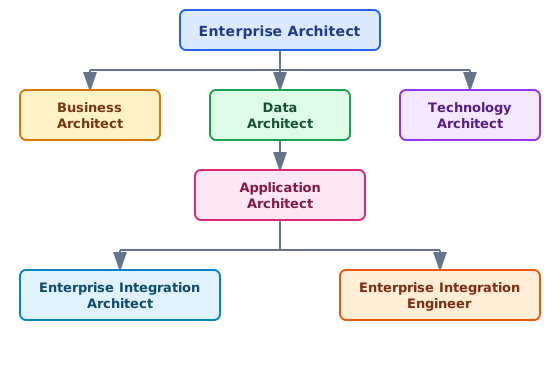
Enterprise Architect
The Enterprise Architect plays a major role in enterprise architecture planning, establishing the overall direction and ensuring alignment between business strategy and IT implementation.
Responsibilities
- Lead enterprise architecture planning initiatives
- Establish architecture principles and standards
- Ensure alignment between business goals and technology solutions
- Coordinate architecture governance across the organization
- Define architecture roadmaps and transition plans
Key Activities by Phase
| Phase | Primary Activities |
|---|---|
| Strategy | Identify strategic architecture requirements |
| Envision | Develop Architecture Vision, establish governance |
| Inception | Define scope and architecture principles |
| Elaboration | Refine architecture, validate approach |
| Construction | Guide implementation, ensure compliance |
| Transition | Verify architecture implementation |
| Production | Monitor architecture health, plan evolution |
Related Guidelines
- NEAP (Netspective Enterprise Architecture Planning)
- TOGAF Architecture Development Method (ADM)
Artifacts Produced
- Architecture Vision
- Architecture Principles
- Architecture Roadmap
- Governance Framework
- Standards Catalog
Business Architect
The Business Architect develops the business architecture that aligns organizational strategy with operational capabilities.
Responsibilities
- Define business capabilities and value streams
- Model business processes and organizational structures
- Identify business transformation requirements
- Ensure business architecture supports strategic goals
- Bridge communication between business and IT stakeholders
Key Activities
| Activity | Description |
|---|---|
| Capability Modeling | Define and document business capabilities |
| Process Design | Model and optimize business processes |
| Organization Mapping | Document organizational structures and relationships |
| Value Stream Analysis | Identify and optimize value delivery |
| Stakeholder Alignment | Ensure business needs are understood and addressed |
Artifacts Produced
- Business Capability Model
- Business Process Models
- Organization Chart
- Value Stream Maps
- Business Architecture Definition Document
Data Architect
The Data Architect designs the data architecture that supports enterprise information needs.
Responsibilities
- Define data models and data management strategies
- Establish data governance policies
- Design data integration approaches
- Ensure data quality and consistency
- Plan data migration and transformation
Key Activities
| Activity | Description |
|---|---|
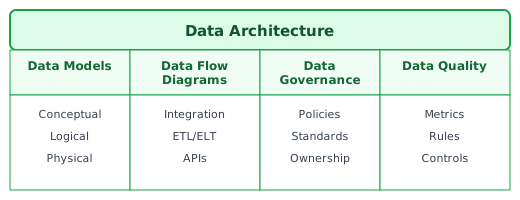
| Data Modeling | Create conceptual, logical, and physical data models |
| Data Governance | Establish policies for data management |
| Integration Design | Define data flow and integration patterns |
| Quality Assurance | Define data quality metrics and controls |
| Security Planning | Ensure data protection and privacy compliance |
Data Architecture Domains
Artifacts Produced
- Data Architecture Definition
- Data Models (Conceptual, Logical, Physical)
- Data Flow Diagrams
- Data Dictionary
- Data Governance Framework
Application Architect
The Application Architect defines the application structure, components, and their interactions.
Responsibilities
- Design application architecture and component structure
- Define integration patterns between applications
- Establish application development standards
- Ensure applications align with enterprise architecture
- Guide technology selection for application platforms
Key Activities
| Activity | Description |
|---|---|
| Component Design | Define application components and boundaries |
| Integration Planning | Design inter-application communication |
| Standards Definition | Establish coding and design standards |
| Technology Selection | Evaluate and recommend application technologies |
| Pattern Application | Apply appropriate design patterns |
Application Architecture Patterns
| Pattern | Use Case |
|---|---|
| Microservices | Scalable, independently deployable services |
| Monolithic | Simple applications with unified deployment |
| Event-Driven | Asynchronous, loosely coupled systems |
| Layered | Separation of concerns in traditional applications |
| Hexagonal | Ports and adapters for testable architecture |
Artifacts Produced
- Application Architecture Definition
- Component Diagrams
- Integration Specifications
- API Contracts
- Application Standards Guide
Technology Architect
The Technology Architect specifies the technology infrastructure and platforms that support the enterprise.
Responsibilities
- Define infrastructure architecture and platforms
- Select technology standards and products
- Design deployment and operational environments
- Ensure infrastructure meets performance and security requirements
- Plan capacity and scalability
Key Activities
| Activity | Description |
|---|---|
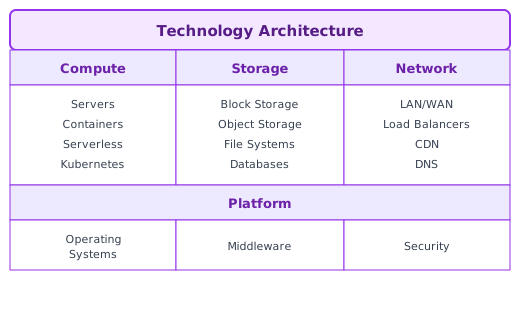
| Infrastructure Design | Define compute, storage, and network architecture |
| Platform Selection | Evaluate and recommend technology platforms |
| Cloud Strategy | Define cloud adoption and migration approach |
| Security Architecture | Design infrastructure security controls |
| Operations Planning | Define monitoring, backup, and disaster recovery |
Technology Domains
Artifacts Produced
- Technology Architecture Definition
- Infrastructure Diagrams
- Platform Standards
- Deployment Architecture
- Capacity Plan
Enterprise Integration Architect
The Enterprise Integration Architect designs system integration approaches that enable data and process flow across the enterprise.
Responsibilities
- Define integration architecture and patterns
- Design APIs and messaging systems
- Establish integration standards and governance
- Ensure interoperability between systems
- Plan integration platform evolution
Integration Patterns
| Pattern | Description |
|---|---|
| Point-to-Point | Direct connections between systems |
| Hub-and-Spoke | Centralized integration hub |
| ESB | Enterprise Service Bus for message routing |
| API Gateway | Centralized API management |
| Event Bus | Event-driven integration |
| iPaaS | Cloud-based integration platform |
Key Activities
- Define integration strategy and roadmap
- Design API standards and governance
- Select integration platforms and tools
- Establish security for system interfaces
- Monitor integration health and performance
Artifacts Produced
- Integration Architecture Definition
- API Standards and Guidelines
- Integration Pattern Catalog
- Interface Specifications
- Integration Roadmap
Enterprise Integration Engineer
The Enterprise Integration Engineer implements the integration solutions designed by the Integration Architect.
Responsibilities
- Implement integration interfaces and adapters
- Build and maintain API endpoints
- Configure integration platforms
- Test and validate integrations
- Monitor and troubleshoot integration issues
Key Skills
- API development (REST, GraphQL, SOAP)
- Message queue technologies (Kafka, RabbitMQ)
- Integration platforms (MuleSoft, Dell Boomi, etc.)
- Data transformation (JSON, XML, EDI)
- Scripting and automation
Artifacts Produced
- API Implementations
- Integration Adapters
- Data Transformation Maps
- Test Scripts
- Integration Documentation
Architecture Role Interactions
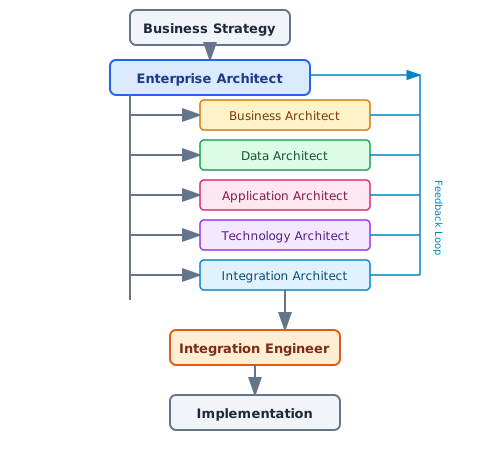
Collaboration Matrix
| Role | Collaborates With | On Topics |
|---|---|---|
| Enterprise Architect | All architects | Strategic alignment, governance |
| Business Architect | Enterprise, Application | Business requirements, capabilities |
| Data Architect | Application, Technology | Data models, integration |
| Application Architect | Data, Technology, Integration | Component design, APIs |
| Technology Architect | Application, Integration | Infrastructure, platforms |
| Integration Architect | Application, Technology | APIs, messaging |
| Integration Engineer | Integration Architect, Developers | Implementation |
Communication Flow
Best Practices
Architecture Governance
- Establish clear decision-making authority
- Document architecture decisions with rationale
- Conduct regular architecture reviews
- Maintain architecture compliance checklists
Stakeholder Engagement
- Communicate architecture value in business terms
- Involve stakeholders early in architecture decisions
- Provide clear visualizations of architecture
- Demonstrate ROI of architecture investments
Continuous Improvement
- Regularly assess architecture effectiveness
- Update architecture based on lessons learned
- Track technical debt and plan remediation
- Stay current with technology trends
Related Resources
Compliance
This section fulfills ISO 13485 requirements for responsibility and authority (5.5.1) and design planning (7.3.2), and ISO 27001 requirements for security roles (A.5.2), secure architecture (A.8.27), and information security in project management (A.5.8).
How is this guide?
Last updated on