
Guidelines
Compliance and development guidelines for regulated software
Guidelines provide standardized approaches for development practices and regulatory compliance. They ensure consistency across teams and help maintain compliance with applicable regulations.
Guidelines Overview
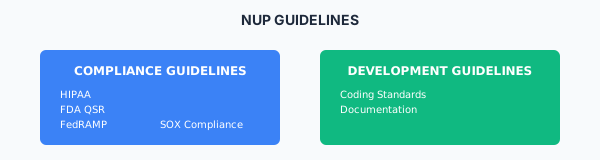
Compliance Guidelines
Guidelines for meeting regulatory requirements:
| Regulation | Focus Area | Primary Concern |
|---|---|---|
| HIPAA | Healthcare data | Protected Health Information (PHI) |
| FDA QSR | Medical devices | Software validation and safety |
| FedRAMP | Federal systems | Security controls and authorization |
| SOX | Financial systems | Internal controls and audit trails |
Why Compliance Matters
- Legal Obligation: Avoid fines and legal action
- Patient/Customer Safety: Protect users from harm
- Data Protection: Safeguard sensitive information
- Business Continuity: Maintain operational capability
- Trust: Build confidence with customers and partners
Development Guidelines
Standards for consistent, high-quality development:
| Area | Purpose |
|---|---|
| Coding Standards | Consistent, readable, maintainable code |
| Documentation | Clear, up-to-date technical documentation |
Benefits of Standards
- Consistency: Uniform code style across the team
- Quality: Fewer bugs through established patterns
- Onboarding: Faster ramp-up for new team members
- Maintenance: Easier to understand and modify code
- Reviews: Objective criteria for code review
Using Guidelines
Integration with Development
- Reference during design - Consult compliance guidelines early
- Apply during development - Follow coding standards
- Verify during review - Check compliance in code reviews
- Document for audit - Maintain evidence of compliance
Keeping Guidelines Current
- Review annually or when regulations change
- Update based on lessons learned
- Get stakeholder sign-off on changes
- Communicate updates to all teams
Related Resources
Compliance Guidelines
Development Guidelines
External Resources
Compliance
This section fulfills ISO 13485 requirements for documentation (4.2.1), control of records (4.2.4), QMS planning (5.4.2), planning of product realization (7.1), and customer requirements (7.2.1), and ISO 27001 requirements for security policies (A.5.1), acceptable use (A.5.10), regulatory requirements (A.5.31), compliance verification (A.5.36), and documented procedures (A.5.37).
How is this guide?
Last updated on