
Roles Overview
Understanding team roles and responsibilities in NUP
In the Netspective Unified Process, roles define the responsibilities, skills, and work products associated with different team members. NUP extends the core OpenUP roles with specialized roles for enterprise architecture, compliance, security, operations, user experience, and digital marketing.
Role Categories
NUP organizes roles into six main categories (48 total roles):
| Category | Focus Area | Roles | Example Roles |
|---|---|---|---|
| Development | Core software development | 6 | Developer, Architect, Analyst, Tester |
| Architecture | Enterprise and system architecture | 7 | Enterprise Architect, Data Architect, Technology Architect |
| Management | Project and team leadership | 2 | Project Manager, Stakeholder |
| Specialist | Compliance, security, and operations | 14 | Security Advisor, HIPAA Compliance Officer, Operations Engineer |
| Marketing | Digital marketing and communications | 19 | CMO, Campaign Manager, Content Manager |
Core Development Roles
These roles come from OpenUP and form the foundation of any NUP project team:
Analyst
The Analyst represents customer and end-user concerns by gathering input from stakeholders to understand the problem to be solved and by capturing and setting priorities for requirements.
Primary Tasks:
- Define Vision
- Detail Requirements
- Find and Outline Requirements
Key Artifacts:
- Glossary
- Supporting Requirements Specification
- Use-Case Model
- Vision
Skills Required:
- Expertise in identifying and understanding problems and opportunities
- Ability to articulate needs associated with key problems
- Effective collaboration through workshops and JAD sessions
- Strong verbal and written communication
- Knowledge of business and technology domains
Architect
The Architect is responsible for defining the software architecture, making key technical decisions that constrain the overall design and implementation of the project.
Primary Tasks:
- Outline the Architecture
- Refine the Architecture
Key Artifacts:
- Architecture Notebook
- Design
Responsibilities:
- Lead technical design of the system
- Document architecturally significant aspects as views
- Provide rationale for decisions
- Balance concerns of various stakeholders
- Reduce technical risks
- Organize team around the architecture
Skills Required:
- Experience in both problem and software engineering domains
- Leadership ability to motivate and make critical decisions
- Excellent communication skills
- Goal-oriented and proactive orientation
Developer
The Developer is responsible for developing a part of the system, including designing it to fit the architecture, prototyping the user interface, implementing, unit-testing, and integrating components.
Primary Tasks:
- Design the Solution
- Implement Developer Tests
- Implement the Solution
- Integrate and Create Build
- Run Developer Tests
- Ensure DevOps Involvement
Key Artifacts:
- Build
- Design
- Developer Test
- Implementation
Skills Required:
- Create technical solutions in the project's technology
- Understand and conform to the architecture
- Build developer tests covering required behavior
- Communicate design effectively
- UML modeling ability (for visual design)
Tester
The Tester is responsible for the core activities of the test effort: identifying, defining, implementing, and conducting tests, as well as logging outcomes and analyzing results.
Primary Tasks:
- Create Test Cases
- Implement Test Scripts
- Run Tests
Key Artifacts:
- Test Case
- Test Log
- Test Script
Responsibilities:
- Identify tests that need to be performed
- Select appropriate implementation approach for tests
- Implement individual tests
- Set up and execute tests
- Log outcomes and verify test execution
- Analyze and recover from execution errors
- Communicate test results to the team
Management Roles
Project Manager
The Project Manager leads the planning of the project in collaboration with stakeholders and team, coordinates interactions with stakeholders, and keeps the project team focused on meeting project objectives.
Primary Tasks:
- Plan Project
- Plan Iteration
- Manage Iteration
- Assess Results
Key Artifacts:
- Project Plan
- Risk List
- Iteration Plan
- Work Items List
Stakeholder
The Stakeholder represents anyone materially affected by the outcome of the project. This includes customers, users, sponsors, and anyone with a vested interest.
Responsibilities:
- Provide requirements and feedback
- Participate in reviews
- Approve deliverables
- Make go/no-go decisions at milestones
Architecture Roles
NUP defines specialized architecture roles for enterprise-level planning:
| Role | Description |
|---|---|
| Enterprise Architect | Leads enterprise architecture planning following NEAP guidelines |
| Business Architect | Develops business architecture aligned with strategic goals |
| Data Architect | Designs data models and data management strategies |
| Application Architect | Defines application structure and integration patterns |
| Technology Architect | Specifies technology infrastructure and platforms |
| Enterprise Integration Architect | Designs system integration approaches |
| Enterprise Integration Engineer | Implements integration solutions |
Specialist Roles
NUP adds specialized roles for compliance, security, and operations:
Compliance & Security Roles
| Role | Responsibility |
|---|---|
| Security Advisor | First point of contact for security support; serves as security advisor for the project |
| Security Tester | Conducts security testing and vulnerability assessment |
| Safety Assurance Analyst | Ensures safety requirements are identified and addressed |
| Safety Tester | Tests safety-critical functionality |
| Information Assurance Analyst | Ensures information security controls are in place |
| HIPAA Compliance Officer | Ensures HIPAA requirements are met and conducts periodic audits |
| RCA Analyst | Regulatory Compliance Assurance - ensures regulatory requirements are addressed |
| RCV | Regulatory Compliance Verification - verifies compliance implementation |
Operations Roles
| Role | Responsibility |
|---|---|
| Operations Engineer | Sets up development, test, and production environments with DevOps teams |
| Release Engineer | Manages build, release, and deployment processes |
| Reliability Engineer | Ensures system reliability through design and testing |
UX/Design Roles
| Role | Focus |
|---|---|
| Interaction Designer | Designs user interactions and workflows |
| Usability Designer | Ensures products are easy to use |
| User Interface Designer | Creates visual interface designs |
| Sensory Designer | Addresses multi-sensory aspects of user experience |
Marketing & Business Roles
NUP includes 19 marketing and business roles to support the Digital Marketing discipline:
Executive Leadership
| Role | Responsibility |
|---|---|
| Chief Marketing Officer (CMO) | Overall marketing strategy and execution |
| Chief Digital Officer (CDO) | Digital transformation and digital channels |
| VP Marketing / Communication | Senior marketing and communications leadership |
| Head of Digital Strategy | Digital presence and online engagement |
Marketing Management
| Role | Responsibility |
|---|---|
| Marketing Lead | Day-to-day marketing coordination |
| Campaign Manager | Plans and executes marketing campaigns |
| Brand Director / Manager | Brand identity and consistency |
| CRM Manager | Customer relationship management |
| Lead Generation Manager | Qualified lead generation strategies |
| Advertising Manager / Director | Advertising campaigns across channels |
| PR Manager / Director | Public relations and media communications |
| External Communications Manager | External-facing communications |
| Director Marketing / Communication | Combined marketing and communications |
Content & Channels
| Role | Responsibility |
|---|---|
| Content Manager | Content strategy and production |
| Blogger | Written content creation |
| Media Manager | Media planning, buying, and management |
| Email Marketing Lead | Email marketing programs |
| Events Manager | Marketing events and experiences |
| Evangelist | Product/service advocacy and community |
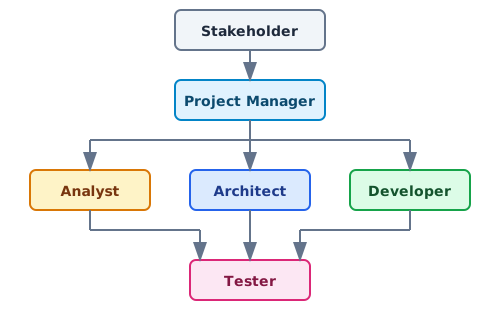
Role Relationships
Role Assignment Approaches
Small Agile Teams
- Roles are often shared among team members
- One person may perform multiple roles
- Self-organization determines who does what
Large Teams
- Dedicated individuals for each role
- Specialized skills for complex requirements
- Clear separation of responsibilities
Hybrid Approach
- Core roles are dedicated
- Supporting roles are shared
- Flexibility based on project needs
RACI Matrix Example
| Activity | PM | Architect | Developer | Analyst | Tester |
|---|---|---|---|---|---|
| Plan Project | R/A | C | I | C | I |
| Define Vision | C | C | I | R/A | I |
| Outline Architecture | C | R/A | C | C | I |
| Implement Solution | I | C | R/A | C | I |
| Run Tests | I | I | C | C | R/A |
Legend: R = Responsible, A = Accountable, C = Consulted, I = Informed
Best Practices
Role Definition
- Clearly define responsibilities for each role
- Document skills required for each role
- Identify artifacts each role produces
Role Assignment
- Match skills to role requirements
- Consider workload balance
- Allow for growth and learning
Role Collaboration
- Establish communication channels
- Define handoff points between roles
- Create shared understanding of deliverables
Related Resources
Compliance
This section fulfills ISO 13485 requirements for responsibility and authority (5.5.1), management representative (5.5.2), human resources (6.2), design planning (7.3.2), and internal audit (8.2.2), and ISO 27001 requirements for security roles and responsibilities (A.5.2), segregation of duties (A.5.3), management responsibilities (A.5.4), screening (A.6.1), and security awareness (A.6.3).
How is this guide?
Last updated on